Vineyard Worker
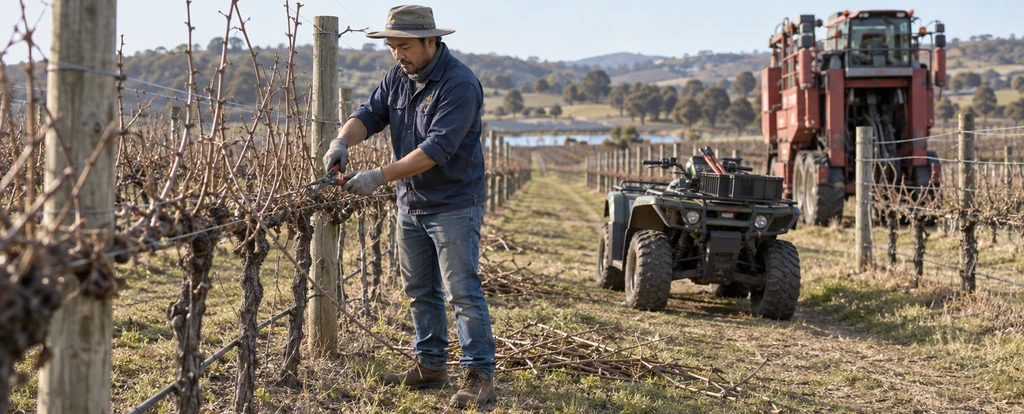
Vineyard workers tend grapevines through the seasons, from winter pruning to the summer and autumn harvest.
- Median salary*
- $59,800
4.0%vs last year, before tax
- People employed
- 2,900
0.0%vs last year
- Projected growth*
- −1.5%
to 2035
- AI exposure*
- Low
- automation risk
- Average hours*
- 42/wk
+2h vs all jobs
- Shortage status*
- In shortage (regional)
national
The work happens outdoors on grape-growing properties, mostly in the wine regions of South Australia, Victoria, New South Wales and Western Australia. A vineyard worker sits below the viticulturist, who decides how each block is managed: workers carry out the pruning, training, spraying and picking that follow from those decisions. Most are employed by wine companies or independent growers, and the job swings with the season.
How much do vineyard workers earn?
The median full-time salary for a vineyard worker is $59,800 per annum, before tax, up $12,400 since 2018.
How you are engaged matters as much as the job itself. Permanent vineyard positions sit under the Wine Industry Award, where machinery operation, spraying and supervisory duties attract higher rates, while casual pruning and harvest crews are usually paid by the hour or, on some blocks, by the row or bin. Chemical accreditation, a forklift licence and tractor experience all move you into better-paid work, and vintage shifts attract overtime or penalty rates.
What does a vineyard worker do day to day?
The list below is what fills most weeks; the exact mix shifts with seniority and whatever stage the current work is at.
- Pruning each vine by hand through winter, choosing which canes to keep for the coming crop
- Training shoots onto the trellis and thinning the canopy as the vines grow
- Walking blocks to check for pests, disease and water stress, and reporting what you find
- Driving tractors and running implements for mowing, mulching and spraying
- Bringing in the harvest by hand or with a mechanical harvester, often across long shifts
What skills do vineyard workers need?
Employers look for plant and equipment operation, hand and power tool work, worksite safety management, backed by Tractor fluency and strong physical stamina and dexterity.
Specialist skills
- Plant and equipment operation
- Hand and power tool work
- Worksite safety management
Software and tools
- Tractor
- Pruning shears
- Vine trimmer
- Mechanical harvester
- ATV
General skills
- Physical stamina and dexterity
- Attention to detail
- Problem solving
Is the job growing?
About 2,900 people work as vineyard workers in Australia, and employment is projected to decline 1.5% over the decade to 2035. That's a real decline, worth weighing carefully before training into the role.
How do you become a vineyard worker?
Here's the path most vineyard workers take, step by step.
- 1Start with seasonal vineyard work
Pruning, shoot thinning and harvest crews take on people with no vineyard experience, and growers usually train you on the job. Labour hire firms and harvest contractors are common ways in, and the work is paid at award rates.
- 2Get the licences employers ask for
A current driver's licence is close to essential because blocks are spread out and public transport is rare. Chemical accreditation through ChemCert is required before you handle or apply agricultural chemicals, and a forklift licence helps in sheds and at vintage.
- 3Study while you work
A certificate III in horticulture, agriculture or viticulture covers the plant science behind pruning, trellising and irrigation, and TAFE and agricultural colleges run it part time around the season. The most common qualification held by people in the role is Certificate III/IV, at about 34% of the current workforce.
- 4Add machinery and spray skills
Tractor, sprayer and harvester work pays better than general hand work and is the usual route into agricultural machinery operator roles. Time on a vineyard's own equipment is often enough to start, and short courses cover chemical application and machinery operation.
- 5Move towards supervision or viticulture
Block supervisor and vineyard manager roles usually come from several seasons on the same property. A diploma or degree in viticulture opens up the technical side, where you decide how blocks are managed rather than carrying out the tasks.
Ready to apply as a vineyard worker?
Whether you're working toward becoming a vineyard worker or already are one and want a hand with the next step (sharpening your resume for ATS screening, tightening your cover letter, or knowing what you'll actually be asked at interview), here are examples grounded in this specific role, not generic templates.
What jobs can a vineyard worker move to?
Moving into Agricultural Machinery Operator typically comes with the biggest pay rise, worth $15,600 a year more on average.
| Move to | Typical pay change | Overlap | Retraining |
|---|---|---|---|
| Agricultural Machinery Operator Vineyard workers already handle tractors and implements, so a machinery ticket lets them take on spraying and harvest operations. | +$15,600 | 52% | short course |
| Orchardist Vine pruning, trellising and harvest skills transfer to fruit tree management, with further study in orchard production required. | +$13,000 | 43% | reskill |
| Flower Grower Vine husbandry and seasonal crop care carry across to flower production, with a short course in horticulture. | +$5,200 | 50% | short course |
| Viticulturist Hands-on vine care transfers to monitoring vine health and yield, though formal study in viticulture is needed. | +$4,700 | 4% | reskill |
Moves are chosen from Jobs and Skills Australia's Data on Occupation Mobility, which follows income tax records between 2011-12 and 2020-21, together with entry requirements and skill overlap. A known move is one people were seen making in that data. Pay change compares median full-time pay for the two roles.
Who works as a vineyard worker?
The typical vineyard worker is 45 years old; 76% are men, 62% work full-time, and full-timers average 42 hours a week.
- 45
- Median age
- 24%
- Female share
- 62%
- Full-time
- +2h
- vs all-jobs avg
What's it like being a vineyard worker?
The job moves with the vine's cycle, so the work in July looks nothing like the work in March. Winter is pruning, spring and summer are canopy, irrigation and spray programs, and vintage runs long days and nights for weeks at a time. Full-time workers average around 42 hours a week, and harvest weeks run well past that. It suits someone who likes being outdoors, does not mind repetition, and takes satisfaction in finishing a block cleanly; an interest in machinery or in how vines respond to weather helps.
What people like
- The season changes what you do. Pruning, canopy work, spraying and harvest are genuinely different jobs across the year, so the routine does not sit still for long.
- You can see what you finished. A pruned block or a row of vines tied down is visible progress by the end of the day, which is not true of every job.
- Machinery breaks up the manual work. Tractor and implement work gives your hands a rest and adds a mechanical side to the role.
- Crews get close during harvest. You work alongside the same people for weeks under pressure, and vineyard teams tend to stay in touch between seasons.
What people find hard
- Weather decides the day. Heat, rain and frost change what can be done and when, and summer pruning days start early to beat the worst of it.
- Seasonal and casual work. Many jobs run for pruning or vintage and then end, so income across a year can be uneven unless you find a permanent position.
- Repetition takes a toll. Thousands of cuts a day, plus bending and lifting, wears on wrists, shoulders and backs over a long season.
- Vineyards are out of town. Blocks sit away from towns and services, so you need a car and often travel between properties during the week.
Based on our synthesis of professional-body surveys and public accounts of the role, not first-person verified reviews.
Which industries employ vineyard workers?
Agriculture, Forestry and Fishing employs the largest share of vineyard workers, followed by Manufacturing.
Top employing industries
- 1Agriculture, Forestry and Fishing
- 2Manufacturing
- 3Administrative and Support Services
Ranked by employment share; the source doesn't publish an exact percentage per industry.
| Certificate III/IV | 34% | |
|---|---|---|
| Diploma / Advanced Diploma | 26% | |
| Bachelor degree | 20% | |
| Year 12 or below | 20% |
Will AI replace vineyard workers?
This is a job with low exposure, because most of it is physical work done vine by vine. Mechanical harvesters are already standard on larger vineyards and vineyard management software, sensors and drones now map yield and flag dry or stressed blocks, which changes how tasks are scheduled. Pruning, training, trellising and repairs still need someone in the row with secateurs, and that is where the hours go.
Share of typical working time by exposure level
- Pruning and training vinesEach vine is cut by hand over winter, and which canes you keep for next season's crop depends on how that block is growing.35%low
- Tractor and implement workMowing, mulching and spraying are increasingly guided by GPS, but you still watch boom height, wind and spray drift through the row.25%moderate
- Checking vine health and irrigationSensors and mapping software flag blocks at risk of disease or water stress, and someone still walks those rows to confirm what is happening.25%low
- Harvesting grapesMechanical harvesters take most of the crop for bulk wine in a single night pass, though hand-picked fruit for premium labels still keeps crews busy for weeks.15%high
Common questions about becoming a vineyard worker
Straight answers to the questions people ask most.
How much does a vineyard worker earn?
A vineyard worker earns a median of $59,800 per year before tax. Rates rise with machinery operation, chemical handling and supervisory responsibility, and casual vintage shifts can pay penalty rates on top of the hourly rate.
How do you become a vineyard worker?
Most people start with a casual pruning or harvest job, which needs no formal qualification and often comes through a labour hire crew or a direct approach to a local grower. A driver's licence and your own transport matter in regional areas, and chemical accreditation is needed before you handle agricultural chemicals. A certificate III in horticulture (AHC30722), agriculture or viticulture helps if you want ongoing work rather than a single season.
Are vineyard workers in demand?
Vineyard workers are currently in shortage in regional areas. Employment is projected to decline 1.5% over the decade to 2035, so the number of ongoing positions is expected to ease, though growers still take on crews for every pruning season and vintage.
Is vineyard work seasonal?
It often is. Pruning runs through winter and vintage through late summer and autumn, and growers hire extra crews for both, so plenty of vineyard jobs are casual or fixed-term. Permanent positions exist on larger estates, where workers move between blocks, machinery and maintenance across the year.
Will AI and automation replace vineyard workers?
It reaches some of the work, but not the parts that need hands on vines. Mechanical harvesters already take most of the crop for bulk wine, and vineyard software, sensors and drones now map yield and flag dry or diseased blocks, which changes how the work is directed rather than removing it. Pruning, training and trellising each vine by hand stay with people.
Where can vineyard work take you?
Tractor and implement experience leads into agricultural machinery operator roles, which pay $15,600 more. Becoming a viticulturist means formal study in viticulture, and the median pay for that role is $4,700 more than for vineyard work. Orchard and flower growing draw on the same pruning, trellising and seasonal crop skills.
Related roles
Not sure this is you? Take the career quiz and get a ranked shortlist of roles that fit how you like to work.