Street Sweeper Operator
Street sweeper operators drive and run mechanical sweepers to keep roads, kerbs and public spaces clear of litter, leaves and grit.
- Median salary*
- $75,400
3.6%vs last year, before tax
- People employed
- 620
3.3%vs last year
- Projected growth
- +3.7%
to 2035
- AI exposure*
- Moderate
- automation risk
- Average hours
- 41/wk
+1h vs all jobs
- Shortage status
- Not in shortage
national
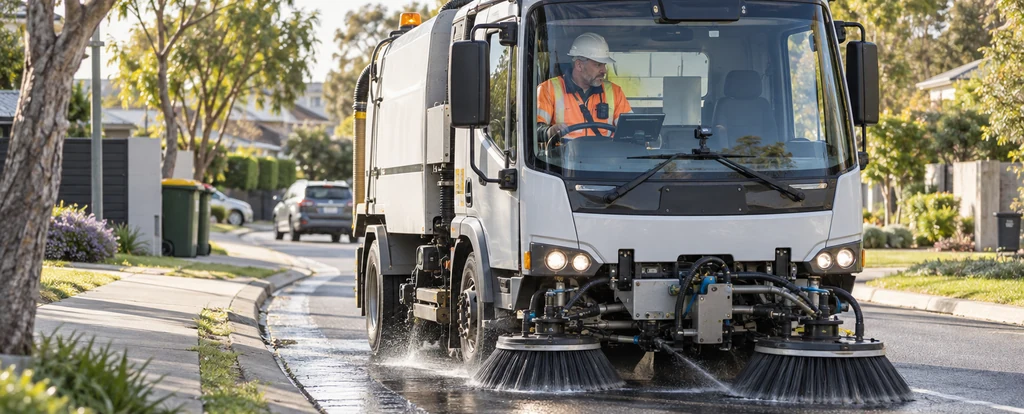
Street sweeper operators work for councils and contractors, driving mechanical sweepers along kerbs, car parks and footpaths and cleaning by hand in the spots the machine cannot reach. The job sits close to waste collection, but the focus is public space rather than household bins, and much of it happens in live traffic. Shifts often start before dawn or run overnight so the sweeper is not adding to the congestion it is clearing.
How much do street sweeper operators earn?
The median full-time salary for a street sweeper operator is $75,400 per annum, before tax, up $16,100 since 2018.
Pay is usually set by a local government enterprise agreement or a contractor's own rates, so two operators doing similar work can earn differently. Shift loadings for early morning and night work, weekend penalty rates and the size of the plant you are licensed to operate all move the figure. Overtime during storm clean-ups or special events adds to it as well.
What does a street sweeper operator do day to day?
The list below is what fills most weeks; the exact mix shifts with seniority and whatever stage the current work is at.
- Driving a mechanical sweeper along kerbs, road edges and footpaths
- Clearing litter, leaves and debris by hand around parked cars, bollards and bins
- Checking and cleaning brushes, nozzles, filters and the hopper before and after a run
- Emptying collected waste at approved disposal sites and recording the load
- Reporting damaged kerbs, illegal dumping and hazards, and setting up safe work zones around the sweeper
What skills do street sweeper operators need?
Employers look for plant and equipment operation, driving and transport operations, cleaning and grounds maintenance, backed by Verizon Connect fleet telematics fluency and strong safety and compliance awareness.
Specialist skills
- Plant and equipment operation
- Driving and transport operations
- Cleaning and grounds maintenance
- Worksite safety management
Software and tools
- Verizon Connect fleet telematics
- UHF two-way radio
- Digital pre-start inspection app
- In-cab camera system
- Online council job management system
General skills
- Safety and compliance awareness
- Attention to detail
- Problem solving
Is the job growing?
About 620 people work as street sweeper operators in Australia, and employment is projected to grow 3.7% over the decade to 2035. That's modest growth: demand is steady rather than booming.
How do you become a street sweeper operator?
Here's the path most street sweeper operators take, step by step.
- 1Get your car licence and a clean driving record
Most operators start here, because councils and contractors check your driving history before putting you behind the wheel of a heavy vehicle.
- 2Add a heavy vehicle licence
An MR or HR licence is the usual requirement for the sweeper trucks, and you can train for it through a registered training organisation once you hold a car licence.
- 3Pick up site safety cards where they apply
A White Card is often asked for if sweeping happens on construction or civil sites, and larger employers usually run their own induction for working on roads.
- 4Learn the sweeper itself
Brush pressure, water spray and pick-up height all differ from driving a truck, so new operators usually get in-cab training and a verification of competency before working a route alone.
- 5Consider coming across from nearby work
Many operators arrive from waste collection, labouring or truck driving, which supplies the heavy vehicle experience and local knowledge that councils look for.
Ready to apply as a street sweeper operator?
Whether you're working toward becoming a street sweeper operator or already are one and want a hand with the next step (sharpening your resume for ATS screening, tightening your cover letter, or knowing what you'll actually be asked at interview), here are examples grounded in this specific role, not generic templates.
What jobs can a street sweeper operator move to?
Moving into Bulk Materials Handling Operator typically comes with the biggest pay rise, worth $30,700 a year more on average.
| Move to | Typical pay change | Overlap | Retraining |
|---|---|---|---|
| Bulk Materials Handling Operator Plant control and load handling carry into bulk materials handling, with site-specific training for conveyors and stockpile equipment. | +$30,700 | 28% | reskill |
| Earthmoving Plant Operator Operating sweeper plant and reading roadworks give a base for earthmoving plant, with tickets for excavators or loaders adding the needed skills. | +$27,600 | 47% | short course |
| Truck Driver Street sweeper operators bring heavy vehicle handling and route knowledge to truck driving, though a heavy vehicle licence and on-road experience are needed.Known move | +$26,500 | 30% | reskill |
| Waste Collector Street sweeping and waste collection share public cleanliness duties, so kerbside collection work follows with a heavy vehicle ticket. | +$600 | 81% | short course |
Moves are chosen from Jobs and Skills Australia's Data on Occupation Mobility, which follows income tax records between 2011-12 and 2020-21, together with entry requirements and skill overlap. A known move is one people were seen making in that data. Pay change compares median full-time pay for the two roles.
Who works as a street sweeper operator?
The typical street sweeper operator is 54 years old; 96% are men, 88% work full-time, and full-timers average 41 hours a week.
- 54
- Median age
- 4%
- Female share
- 88%
- Full-time
- +1h
- vs all-jobs avg
What's it like being a street sweeper operator?
The rhythm of the job is a set route, an early start and a machine that has to be checked before it goes out. Much of the skill is reading traffic and pedestrians while working the brushes, and knowing when to stop and clear something by hand instead. It suits someone who likes finishing a visible job each day, is comfortable alone in a cab and does not mind weather or repetition.
What people like
- You can see what you finished. By the end of a run the kerb line is clear, which gives the job a visible result rather than a pile of paperwork.
- Mostly your own company. You work alone in the cab for long stretches with the radio and the run sheet, which suits people who prefer not to be supervised closely.
- Early starts mean quieter roads. Sweeping often runs before peak hour or overnight, so you are working when traffic is lighter and finishing earlier in the day.
- Steady conditions. Council and large contractor roles usually come with regular rosters, leave entitlements and rostered days off.
What people find hard
- Working in live traffic. Parked cars, cyclists, pedestrians and opening doors all sit close to the sweeper, so a moment's distraction can mean an incident.
- Weather and dust. The cab is enclosed, but you still step out into heat, cold and rain to clear blockages and check the machine.
- Breakdowns mid-route. When a brush jams or a hose fails, the streets still need sweeping, so the run gets patched up or made up on another day.
- Repetition. The same streets in the same order week after week is part of the appeal for some operators and the tedious part for others.
Based on our synthesis of professional-body surveys and public accounts of the role, not first-person verified reviews.
Which industries employ street sweeper operators?
Public Administration and Safety employs the largest share of street sweeper operators, followed by Administrative and Support Services.
Top employing industries
- 1Public Administration and Safety
- 2Administrative and Support Services
- 3Construction
Ranked by employment share; the source doesn't publish an exact percentage per industry.
| Year 12 or below | 61.4% | |
|---|---|---|
| Certificate III/IV | 28.1% | |
| Diploma / Advanced Diploma | 4.3% | |
| Bachelor degree | 2.3% | |
| Postgraduate | 0% |
Will AI replace street sweeper operators?
AI and automation reach the reporting and route side of this job more than the sweeping itself. Telematics, brush sensors and job management apps now record where a sweeper went and what it picked up, and some councils adjust routes from that data. The driving, the judgement around traffic and the hand cleaning around parked cars and bollards stay with the operator.
Share of typical working time by exposure level
- Driving the sweeper along kerbs and traffic lanesLane-keeping and collision warnings help, but the operator still reads traffic, pedestrians and parked cars and decides where the pick-up head can safely run.40%moderate
- Clearing debris by hand around parked cars, bollards and binsThis is a broom, a shovel and a decision about what can be reached safely, which no machine manages on a typical suburban street.25%low
- Pre-start checks and clearing jams in brushes, nozzles and filtersSensors flag low brush pressure or a blocked nozzle, but a person still climbs out to clear the debris and judge whether the machine can keep working.20%low
- Recording jobs, hazards and disposal docketsJob management apps and telematics now log locations, times and loads automatically, so the operator mainly confirms the entry or adds a note about a hazard.15%high
Common questions about becoming a street sweeper operator
Straight answers to the questions people ask most.
How much does a street sweeper operator earn?
Street sweeper operators earn a median of $75,400 per year before tax, based on full-time workers. What you actually take home depends on the enterprise agreement or contractor you work for, plus shift loadings for early morning and night work and the class of plant you operate.
How do you become a street sweeper operator?
Most employers want a car licence with a clean record, an MR or HR heavy vehicle licence and sweeper training on the job. A White Card helps if the work covers construction or civil sites, and plenty of operators move across from waste collection, labouring or truck driving.
Are street sweeper operators in demand?
Street sweeper operators are currently not in shortage, and employment is projected to grow 3.7% over the decade to 2035. With about 620 people in the role nationally, openings tend to come from operators leaving or retiring and from councils renewing contracts rather than from new positions being created.
Will AI or automation replace street sweeper operators?
Parts of the job are already automated: sweepers carry route tracking, brush sensors and on-board cameras, and council systems log jobs and loads without much typing. The driving in live traffic and the hand cleaning around parked cars and bollards stay with the operator, which is where most of the difficulty in the work sits.
What can street sweeper operators move on to?
Street sweeping and waste collection share kerbside cleanliness duties, and pay in waste collection is $600 more. Truck driving and earthmoving plant operation build on the heavy vehicle and plant skills and pay $26,500 more and $27,600 more respectively, though each needs further licensing or a short course. This work is done for councils and contractors rather than as a solo business, so progression usually means a leading hand or supervisory role.
How many hours do street sweeper operators work?
Full-time street sweeper operators average around 41 hours a week, and 88% of the workforce works full time. Early morning and overnight rosters are common, along with weekend and public holiday shifts in larger councils.
Related roles
- Truck Driver
- Earthmoving Plant Operator
- Bulk Materials Handling Operator
- Waste Collector
- Truck Driver
- Waste Collector
Not sure this is you? Take the career quiz and get a ranked shortlist of roles that fit how you like to work.